These days, it’s very easy to get lost in time when online. We’ve all had that moment, immersed in our phone playing a game, or sitting at a computer screen watching a live stream, and suddenly you look up and realise three hours have disappeared. That’s the magic of immersion, and it’s something game developers and streaming platforms are getting scarily good at creating, causing more and more of us to spend time on our phones or other digital devices.
So what exactly makes some experiences so captivating that we lose track of time entirely? And how are today’s platforms from AAA game studios and live-streaming sites to immersive gaming platforms creating these moments of total absorption? Let’s take a look at how it all works.
Forget You’re Staring at a Screen
True immersion happens when the barrier between you and the experience disappears. For many players, this becomes a lack of awareness of the rest of the world, not hearing the doorbell, not realising that there is a controller in the hands, and the feeling that you’re in the environment rather than playing.
And of course, none of this is accidental. Developers and designers spend countless hours figuring out how to trigger this state, and they’ve become really clever about it. From the sounds that play when you score a win to the way a camera pans during a dramatic moment, every detail is engineered to pull you deeper into the experience.
Audio is a Secret Weapon in Gaming
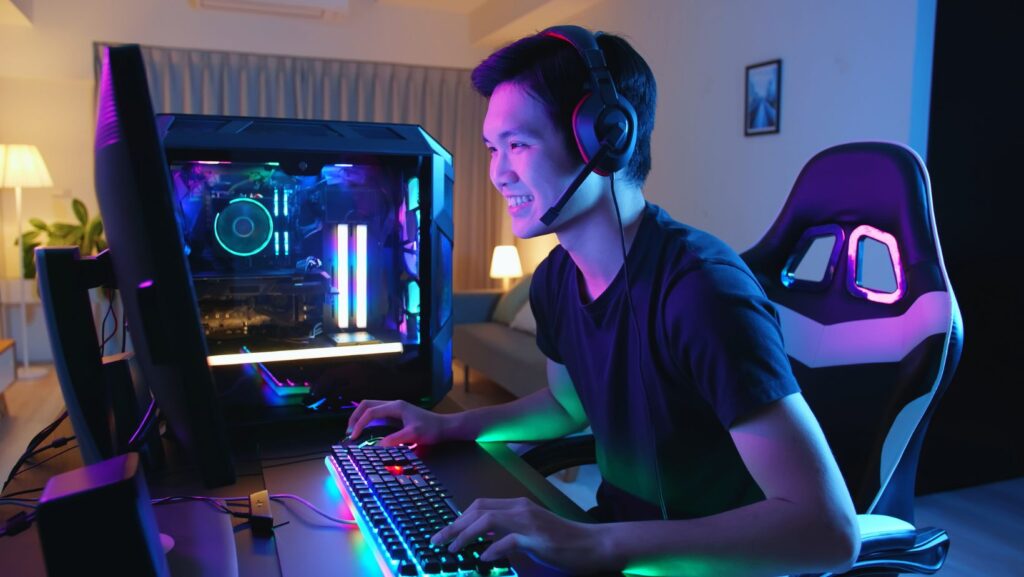
What’s strange to think is that you can close your eyes, but you can’t close your ears. Sound designers know this, and they exploit it brilliantly within movies, TV and games. Think about your favourite game or stream. The chances are that the audio does heavy lifting you’ve never consciously noticed. The subtle ambient sounds that make a virtual environment feel alive, or the music that swells at exactly the right moment.
And there’s a reason for this. Good audio creates a sense of belonging in a space that visuals alone can’t. It’s why horror games with great sound design terrify you even when the graphics are mediocre, and why streams with crisp, well-balanced audio feel more professional and engaging.
Visuals That Respond to You
However, the visuals need to be on point as well. This is because static environments are boring. Especially now, our brains crave feedback and responsiveness. Modern games and live-streaming platforms understand this. For example, when a game world reacts to your choices with things like lighting changes, crowd response or environmental shifts, your brain starts treating it as real. The same principle applies to live streams where hosts engage with chat in real-time or platforms that let viewers influence what’s happening on screen. This responsiveness creates a feedback loop. You do something, the world responds, and suddenly you’re invested.
Adding in a Social Element
Finally, gaming used to be a solitary activity. Now, it’s social, and that shift has boosted immersion in ways nobody predicted. When you’re playing alongside friends or watching a stream with thousands of other viewers, you’re not just experiencing content, you’re part of a shared moment. This principle is powerfully applied in live casino platforms like Bluffbet, which use real human dealers and live chat functions. These features transform a standard game into a communal event, where the chatter and reactions of other players add a layer of authentic social energy. The collective reactions, inside jokes and community energy add dimensions to the experience that realistic graphics just can’t beat.
Reducing Friction Wherever Possible
Nothing destroys the sense of immersion faster than a clunky interface or a loading screen that drags on forever. The best platforms reduce friction, eliminating any of those annoying little moments that remind you that you’re using technology. This means fast load times, intuitive controls and seamless transitions are now the norm. While these aren’t glamorous features, they’re essential for maintaining that magical flow state where time stops mattering.
Where We’re Headed
The future of immersion looks impressive. VR headsets are getting lighter and more comfortable, haptic feedback technology is becoming more sophisticated, and AI is enabling more responsive and personalised experiences. Importantly, though, the fundamental elements of gaming won’t change. For good immersion, it still needs a solid design and an understanding of what it is that players actually want. So, as long as platforms understand the need for agency in gaming, for connecting with others and for escaping the real world, then immersive gaming experiences will continue to improve.