Feedbuzzard

Tech content that keeps your audience buzzing

  • Home
  • Tech
  • World Tech
  • Wearable Tech
  • About Us
  • Contact
No Result
View All Result
  • Home
  • Tech
  • World Tech
  • Wearable Tech
  • About Us
  • Contact
No Result
View All Result
Feedbuzzard
No Result
View All Result
Home Technology and Computing

How to Build a Workspace That Boosts Productivity and Reduces Daily Distractions

Wuircenden Lornithal by Wuircenden Lornithal
August 4, 2026
in Technology and Computing
0
0
SHARES
0
VIEWS

Table of Contents

Toggle
  • Plan Your Layout Around Workflow
  • Improve Ergonomics to Reduce Physical Strain
  • Optimize Lighting for Focus and Comfort
  • Reduce Visual Clutter
  • Organize Storage for Efficiency
  • Use Color and Environment to Support Your Concentration
  • Designing for Focus Every Day

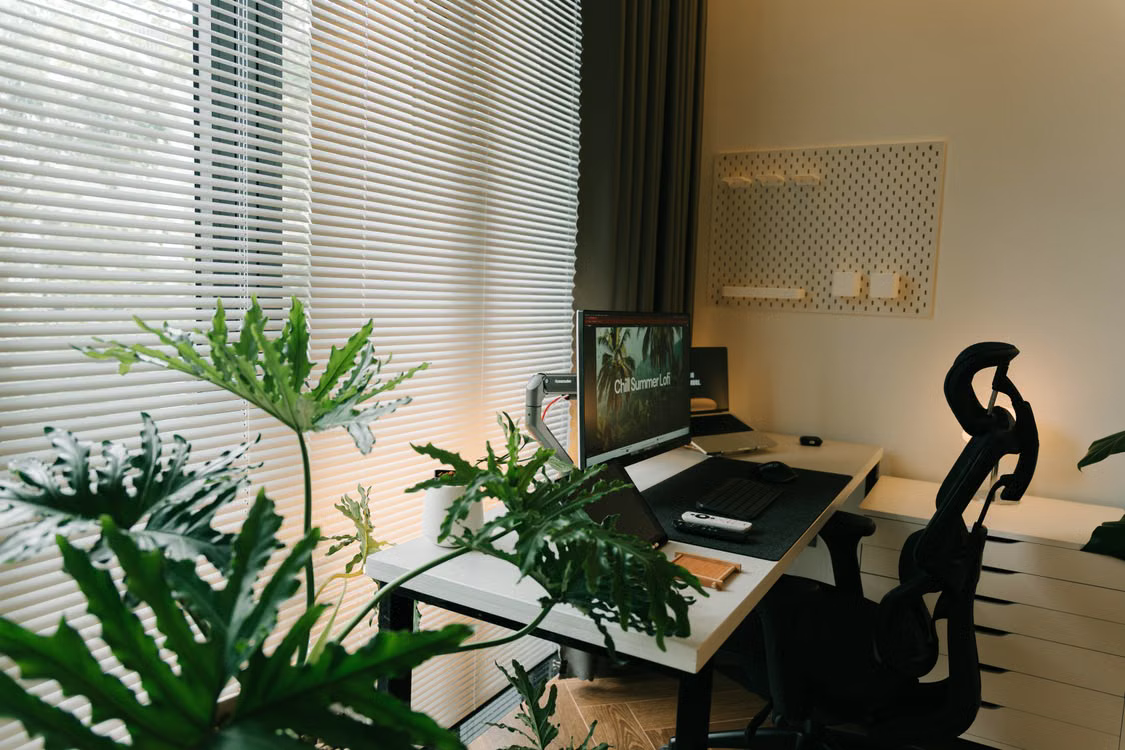
Your workspace should make focus easier, not harder. Various details can influence how well you work throughout the day. If you build your setup with intention, productivity can become more consistent.

Small structural changes often deliver meaningful improvements. A well-designed workspace supports concentration instead of competing with it.

Plan Your Layout Around Workflow

Productive layouts are built around movement. Notice how often you reach for certain tools, reference materials, or shift between tasks during a typical day.

Keep high-frequency items within easy reach and move lower-use materials farther away. And your primary desk area should remain open enough to handle active work without constant rearranging.

Think in terms of zones. A central space for focused tasks, a side area for reference materials, and separate storage for inactive items creates natural order.

If you want to keep that central space visually consistent, something as simple as a large leather desk blotter can create a clearly-defined work surface, while protecting the desk underneath.

It will help separate your active task area from everything else on the desk without adding clutter.

When your layout mirrors how you actually work, unnecessary movement decreases. And focus becomes easier to maintain.

Improve Ergonomics to Reduce Physical Strain

Physical discomfort quietly erodes productivity. When your chair lacks support or your monitor sits too low, your body becomes a distraction.

Choose a chair that supports your lower back and allows your feet to rest flat on the floor. Position your monitor at eye level and align your keyboard so your elbows remain close to ninety degrees.

Good ergonomics reduce strain during long work sessions. Comfort allows sustained attention without constant physical adjustment.

Optimize Lighting for Focus and Comfort

Lighting influences how clearly you see and how long you can work without fatigue. Dim environments reduce alertness, while glare creates eye strain.

Place your workspace near natural light when possible. Add adjustable task lighting to illuminate your main work area without reflecting off screens. Balanced lighting helps maintain steady concentration throughout the day.

Reduce Visual Clutter

Clutter competes for attention before work even begins. Stacks of paper, visible cords, and scattered accessories create subtle mental noise.

Keep your primary surface clear except for active materials. Store completed tasks and unrelated items out of sight.

A simplified visual field lowers cognitive load. Fewer distractions in your line of sight support deeper focus.

Organize Storage for Efficiency

Searching for supplies interrupts momentum. A productive workspace keeps essentials accessible and removes what you do not need daily.

Design storage around frequency of use. Daily tools should stay close, weekly materials should move slightly farther away, and archived documents should leave the immediate area.

Use Color and Environment to Support Your Concentration

Environmental tone affects how a space feels. Neutral colors reduce overstimulation, while overly busy patterns can pull attention away from work.

Incorporate subtle texture or natural elements to create balance. Plants, wood finishes, or soft materials can make the space feel grounded without becoming distracting.

When the environment feels intentional, work habits often follow. Calm surroundings support consistent effort.

Designing for Focus Every Day

Learning how to build a workspace that boosts productivity and reduces daily distractions comes down to thoughtful design. Strategic layout, proper ergonomics, balanced lighting, controlled clutter, organized storage, and a supportive environment all work together.

When your physical space aligns with your workflow, concentration becomes more reliable.

Has this article been helpful? If so, explore some of our other related content.
Total
0
Shares
Share 0
Tweet 0
Pin it 0
Share 0
Wuircenden Lornithal

Wuircenden Lornithal

Related Posts

Technology and Computing

How Big Data Analytics Is Changing Mesothelioma Research and Cancer Care

August 4, 2026
Technology and Computing

How to Choose the Right Custom Generative AI Development Services Provider

July 31, 2026
Technology and Computing

How News Aggregation Has Changed Media Consumption

July 28, 2026
No Result
View All Result

Categories

  • Businesses
  • Casino Bonuses
  • Fitness Trackers
  • Gaming
  • General
  • General News
  • Latest
  • Latest Trends
  • Online Gaming
  • Pokemon
  • Tech
  • Technology and Computing
  • Wearable Tech
  • World Tech
  • World Tech Code
feedbuzzard.com
  • Home
  • Privacy Policy
  • Terms & Conditions
  • About
  • Contact Us
No Result
View All Result

Our Address: 222 Haloria Crossing
Vrentis Point, HV 12345

© 2026 FeedBuzzard.com

We use cookies on our website to give you the most relevant experience by remembering your preferences and repeat visits. By clicking “Accept All”, you consent to the use of ALL the cookies. However, you may visit "Cookie Settings" to provide a controlled consent.
Cookie SettingsAccept All
Manage consent

Privacy Overview

This website uses cookies to improve your experience while you navigate through the website. Out of these, the cookies that are categorized as necessary are stored on your browser as they are essential for the working of basic functionalities of the website. We also use third-party cookies that help us analyze and understand how you use this website. These cookies will be stored in your browser only with your consent. You also have the option to opt-out of these cookies. But opting out of some of these cookies may affect your browsing experience.
Necessary
Always Enabled
Necessary cookies are absolutely essential for the website to function properly. These cookies ensure basic functionalities and security features of the website, anonymously.
CookieDurationDescription
cookielawinfo-checkbox-analytics11 monthsThis cookie is set by GDPR Cookie Consent plugin. The cookie is used to store the user consent for the cookies in the category "Analytics".
cookielawinfo-checkbox-functional11 monthsThe cookie is set by GDPR cookie consent to record the user consent for the cookies in the category "Functional".
cookielawinfo-checkbox-necessary11 monthsThis cookie is set by GDPR Cookie Consent plugin. The cookies is used to store the user consent for the cookies in the category "Necessary".
cookielawinfo-checkbox-others11 monthsThis cookie is set by GDPR Cookie Consent plugin. The cookie is used to store the user consent for the cookies in the category "Other.
cookielawinfo-checkbox-performance11 monthsThis cookie is set by GDPR Cookie Consent plugin. The cookie is used to store the user consent for the cookies in the category "Performance".
viewed_cookie_policy11 monthsThe cookie is set by the GDPR Cookie Consent plugin and is used to store whether or not user has consented to the use of cookies. It does not store any personal data.
Functional
Functional cookies help to perform certain functionalities like sharing the content of the website on social media platforms, collect feedbacks, and other third-party features.
Performance
Performance cookies are used to understand and analyze the key performance indexes of the website which helps in delivering a better user experience for the visitors.
Analytics
Analytical cookies are used to understand how visitors interact with the website. These cookies help provide information on metrics the number of visitors, bounce rate, traffic source, etc.
Advertisement
Advertisement cookies are used to provide visitors with relevant ads and marketing campaigns. These cookies track visitors across websites and collect information to provide customized ads.
Others
Other uncategorized cookies are those that are being analyzed and have not been classified into a category as yet.
SAVE & ACCEPT
No Result
View All Result
  • Home
  • Tech
  • World Tech
  • Wearable Tech
  • About Us
  • Contact

© 2026 JNews - Premium WordPress news & magazine theme by Jegtheme.