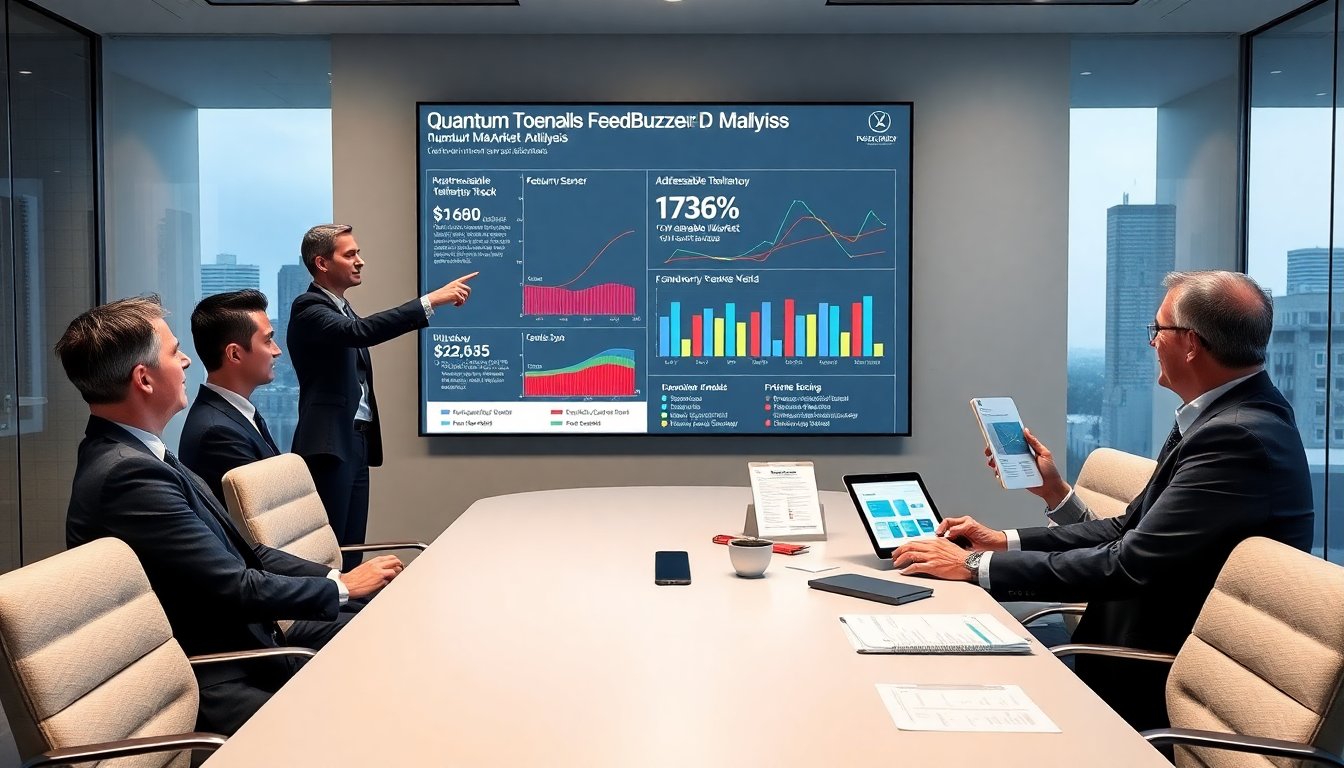
Business feedbuzardly trends and laughing lamps opens the topic clearly. The report states core technologies, markets, and risk factors. It sets expectations for investors and operators. Readers will get data, trade-offs, and action points. The text uses clear terms and direct claims. It avoids jargon and keeps focus on market potential and downside.
Key Takeaways
- Quantum Toenails and FeedBuzzerD technologies enable precise, low-latency sensing and data routing, enhancing real-time telemetry across industries like manufacturing, advertising, and sports.
- The quantum toenails feedbuzzerdmarket analysis highlights strong growth driven by sensor miniaturization, decreasing costs, and rising demand for instant data insights.
- Investors and buyers benefit from faster decision-making despite higher initial costs, but must consider integration complexities and emerging regulatory risks.
- Market players include component makers, middleware vendors, and integrators, each using varied business models such as subscriptions, project fees, and revenue sharing.
- Strategic success depends on focused pilots, secure and compliant solutions, clear service agreements, and rigorous benchmarking to manage technical and operational risks.
- Regulatory and supply-chain challenges in quantum sensing require cautious investment strategies favoring firms with transparency, recurring revenue, and verified performance.
What Quantum Toenails And FeedBuzzerD Technologies Are — Use Cases And Value Propositions
Quantum Toenails and FeedBuzzerD describe two linked innovations. Quantum Toenails refers to a class of nanophotonic sensors. They measure tiny electromagnetic states and they output discrete digital signals. FeedBuzzerD refers to a data-routing stack that aggregates sensor output and it pushes optimized feeds to edge services. Together they enable high-frequency telemetry and low-latency feedback loops.
Use cases appear in industrial monitoring, digital advertising, and live sports telemetry. In industrial monitoring, operators use quantum toenails to detect microfractures and they send alerts via FeedBuzzerD. In advertising, platforms use the pair to measure real-time attention and they deliver targeted creative within milliseconds. In live sports, teams use the pair to stream fine-grain metrics from athlete wearables and they feed analytics dashboards.
Value propositions sit in precision, speed, and data density. Quantum Toenails offer higher signal fidelity than conventional sensors. FeedBuzzerD offers lower routing overhead and predictable delivery. Together they lower latency and they raise event accuracy. They also require specialized integration and they add new telemetry costs.
Investors should note the unique combination. Quantum toenails feedbuzzerdmarket analysis shows the stack reduces time-to-insight. Buyers can trade higher upfront cost for faster decision cycles. Early adopters capture edge advantages, while laggards risk losing operational visibility.
Market Size, Growth Drivers, And Regulatory/Technical Risks
The market for combined sensor-routing stacks shows early traction. Analysts estimate niche adoption in 2024–2026 and they forecast expansion as costs fall. Quantum toenails feedbuzzerdmarket analysis projects addressable markets across manufacturing, adtech, and sports tech. Manufacturing demand drives the first wave. Adtech buyers drive the second wave as they chase real-time metrics. Sports tech buyers drive pilot programs for broadcast enhancements.
Growth drivers include sensor miniaturization, cheaper quantum components, and growing demand for real-time data. They also include faster edge compute and cheaper bandwidth. Vendors who reduce integration time win more deals.
Regulatory and technical risks appear significant. Regulators may restrict certain quantum sensing exports and they may add certification steps. Data privacy rules create compliance costs when telemetry links to personal data. Technical risks include reproducibility of quantum signals, calibration needs, and supply-chain fragility for quantum components.
Market entry also faces operational risks. Systems need secure firmware and robust error handling. Vendors must prove uptime and they must document failure modes. Integrators must plan for versioning and long-term maintenance.
A factual parallel exists in sports media where fast feeds reshape content. For a view of video hubs that host fast sports clips, stakeholders can reference the NFL video hub for examples of live clip delivery and analysis video highlights hub. This example validates the appeal of low-latency feeds in sports broadcasting.
Competitive Landscape, Business Models, And Strategic Recommendations For Stakeholders
The competitive set divides into three groups. First, component makers sell quantum sensors. Second, middleware firms sell feed routers. Third, integrators package end-to-end solutions. Many startups try to cover two layers. Incumbents prefer to partner rather than build internal quantum teams.
Business models vary. Component makers sell hardware and they offer calibration services. Middleware firms charge subscription fees per feed or per event. Integrators charge project fees and they take recurring support contracts. Some providers adopt revenue-share deals when they improve monetization for customers.
Pricing mixes reflect value. High-frequency customers pay premium rates. Low-volume pilots use credits and trial plans. Companies that move customers from pilot to production win higher lifetime value.
Strategic recommendations follow clear priorities. First, buyers should run focused pilots and they should measure signal reproducibility and maintenance needs. Second, vendors should document compliance paths and they should build secure update mechanisms. Third, integrators should offer clear SLAs and they should price for long-term support.
Investors should apply caution. They should insist on verified benchmarks and on third-party audits. They should also evaluate supply-chain diversity for quantum parts. For risk-aware exposure, investors can favor middleware firms with recurring revenue and clear margins.
A related caution exists in gambling and sports monetization, where opaque practices create legal risk. For context on integrity and risk in sports-related monetization, readers can consult an investigative piece on professional football gambling gambling investigation. This example shows how monetization choices can create regulatory attention.
Stakeholders who follow these steps can reduce downside and they can capture early value. Quantum toenails feedbuzzerdmarket analysis supports selective exposure, careful pilots, and provider diligence.