Think back to the last time you spent an afternoon in a place that wasn’t your home or your office. For many of us, those “third spaces” (a term coined by sociologist Ray Oldenburg) used to be the local library, the village pub, or the community centre down the road. These were the spots where you could bump into a neighbour, have a chat about nothing in particular, and feel like you were part of a wider world.
But things have changed quite a bit recently. You’ve probably noticed your local high street looking a bit different. Rents have gone up, local councils have had to tighten their belts, and many of those physical hubs have sadly closed their doors. It’s left a bit of a gap in our social lives. Where do we go now when we want to feel connected without the pressure of a formal “night out”?
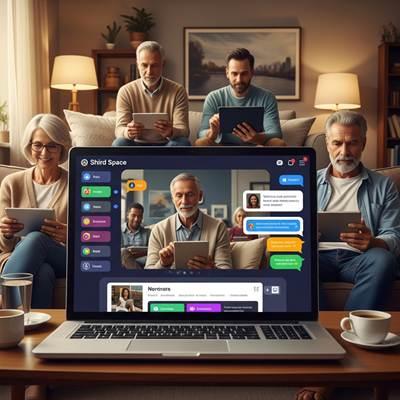
The answer, it seems, is moving into our pockets and onto our screens. We aren’t just looking at a screen to pass the time anymore; we’re using it to find the community we’ve lost on the physical high street. We’re seeing the rise of the “Digital Lounge,” a place where the kettle is always on (at least in your own kitchen) and the conversation never stops.
The Decline of the Physical Third Space
It is no secret that our physical social infrastructure has been under a lot of pressure. According to various reports from the Office for National Statistics, the way we use our town centres has shifted dramatically over the last decade. It isn’t just that we’re shopping online; it’s that the very reason to “go out” has been re-evaluated.
When the local pub closes, it isn’t just a place to buy a drink that disappears. It’s the informal network of people who look out for one another. I’ve noticed that when these places vanish, we don’t stop wanting to socialise; we just find new ways to do it. The cost of living has made a casual evening out a bit of a luxury for some, while others simply find the convenience of home more appealing after a long day.
This shift hasn’t resulted in us becoming hermits, though. Far from it. We are social creatures by nature. What’s happened is a migration. We’ve taken that need for “the regular spot” and moved it into digital environments that can replicate the warmth and familiarity of the old-school community hub.
Interactive Leisure vs. Passive Scrolling
For a while, there was a worry that the internet was making us more isolated. We spent years “doom-scrolling” through social media feeds, looking at photos of people we went to school with and feeling a bit disconnected. That’s what I’d call passive consumption. It’s like watching television; you’re there, but you’re not really there.
Recently, however, there has been a massive pivot toward interactive leisure. People are tired of just being spectators. We want to participate. This is where the digital lounge really comes into its own. Instead of just watching a video, we want to be in the chat, playing a game, or contributing to a group effort.
Participation is the key word here. When you’re active in a digital space, you’re making connections. You’re not just a number in a “view count” anymore. You’re a username with a personality, a regular who people recognise. This shift from “watching” to “doing” is what makes these new digital spaces feel like genuine communities rather than just websites.
The Evolution of Social Interaction
If you look at the history of how we play together, it’s clear that games have always been the glue of our social lives. Take bingo, for instance. For decades, the bingo hall was the beating heart of many British towns. It was a place for a laugh, a catch-up, and a bit of friendly competition.
When the world moved online, many people thought that spirit would be lost. However, platforms like Jackpotjoy have managed to do something quite remarkable. They’ve revitalised traditional bingo online by focusing heavily on the social ecosystem. It isn’t just about the numbers being called; it’s about the chat rooms.
I’ve found that these digital hubs often mimic the physical community centres they’ve replaced. You have your “regulars” who log on at the same time every day. You have chat hosts who act like the friendly landlord of a pub, keeping the conversation flowing and making sure everyone feels welcome. By creating these spaces, they’ve provided a modern social infrastructure that allows people to stay connected, regardless of where they live or whether their local community hall is still standing. It’s a reimagining of a legacy game for a world where we crave connection but need the flexibility of a digital format.
The Psychology of the Micro-Win
There’s also something very interesting happening with the way we experience small successes in these environments. In the world of casual gaming and interactive leisure, we often talk about the “micro-win.” This isn’t about life-changing moments; it’s about those small, frequent bits of positive feedback that brighten a day.
When you’re playing in a chat-led environment, a win isn’t just yours alone. Often, the whole room celebrates with you. You’ll see a flurry of “WD” (well done) messages in the chat. This shared experience is actually quite good for our sense of wellbeing. It reinforces the idea that we’re part of a group.
Psychologically, these micro-wins act as a little social “high-five.” In a world that can sometimes feel quite heavy, these light-hearted interactions provide a necessary breather. Because platforms like Jackpotjoy prioritise the chat features alongside the games, the victory becomes a social event rather than a solitary one. It’s the digital equivalent of someone winning a meat raffle at the local club and everyone giving them a cheer. It’s about the collective joy rather than just the individual result.
Future Frontiers: Blurring the Lines
So, where do we go from here? We’re already seeing the lines between the physical and virtual worlds start to blur. I reckon the next few years will bring some pretty incredible changes to our digital lounges.
We’re already seeing the beginnings of wearable technology and haptic feedback that could make these digital interactions feel even more “real.” Imagine being in a digital bingo room and being able to feel a virtual “pat on the back” from a friend when you’ve had a bit of luck. Or perhaps using augmented reality to bring the chat room into your living room, so it feels like your friends are sitting right there on the sofa with you.
These technologies won’t replace the need for human touch, but they will certainly make our digital “third spaces” feel much more immersive. The goal isn’t to get rid of the physical world, but to enhance our ability to connect when we can’t be together in person. As our internet speeds get faster and our devices get smarter, the “Digital Lounge” will only become more central to how we spend our downtime.
The Changing Face of Connection
The way we socialise is always evolving, but our need for community remains the same. Whether we’re sitting in a wood-panelled pub or logging onto a colourful game from our tablet, we’re all looking for the same thing: a sense of belonging and a bit of fun.
The decline of traditional spaces is a shame, but it’s heartening to see how we’ve adapted. By turning passive consumption into interactive participation, we’ve built new types of neighbourhoods. These digital hubs are more than just bits of code; they’re places where friendships are formed, stories are shared, and the spirit of the old community hall lives on in a brand-new way.
***
Please play responsibly. For advice and support, visit BeGambleAware.org or call the National Gambling Helpline on 0808 8020 133. 18+ only.