Over the past decade, the global digital gaming industry has experienced an unprecedented technological shift. As user volume expands and data consumption spikes, backend architectures must continuously adapt to handle high-concurrency traffic while guaranteeing zero-trust cybersecurity standards. Today, platform performance relies less on aggressive marketing and far more on robust network engineering, real-time data synchronization, and reliable infrastructure design.
Network Infrastructure & The Necessity of Seamless Migration
For high-traffic gaming platforms handling real-time transactional data, maintaining 99.99% system uptime is a primary engineering objective. Network congestion, distributed cyber threats, and outdated server routing can severely degrade user experience, leading to connection drops and data packet loss.
To resolve these bottlenecks, modern operators frequently undergo infrastructure migration—shifting legacy frameworks to high-capacity enterprise gateways.
Key Engineering Benefits of System Upgrades:
- Latency Reduction: Deployed Content Delivery Networks (CDNs) cache static assets closer to local internet service providers (ISPs), reducing round-trip time (RTT) during peak operating hours.
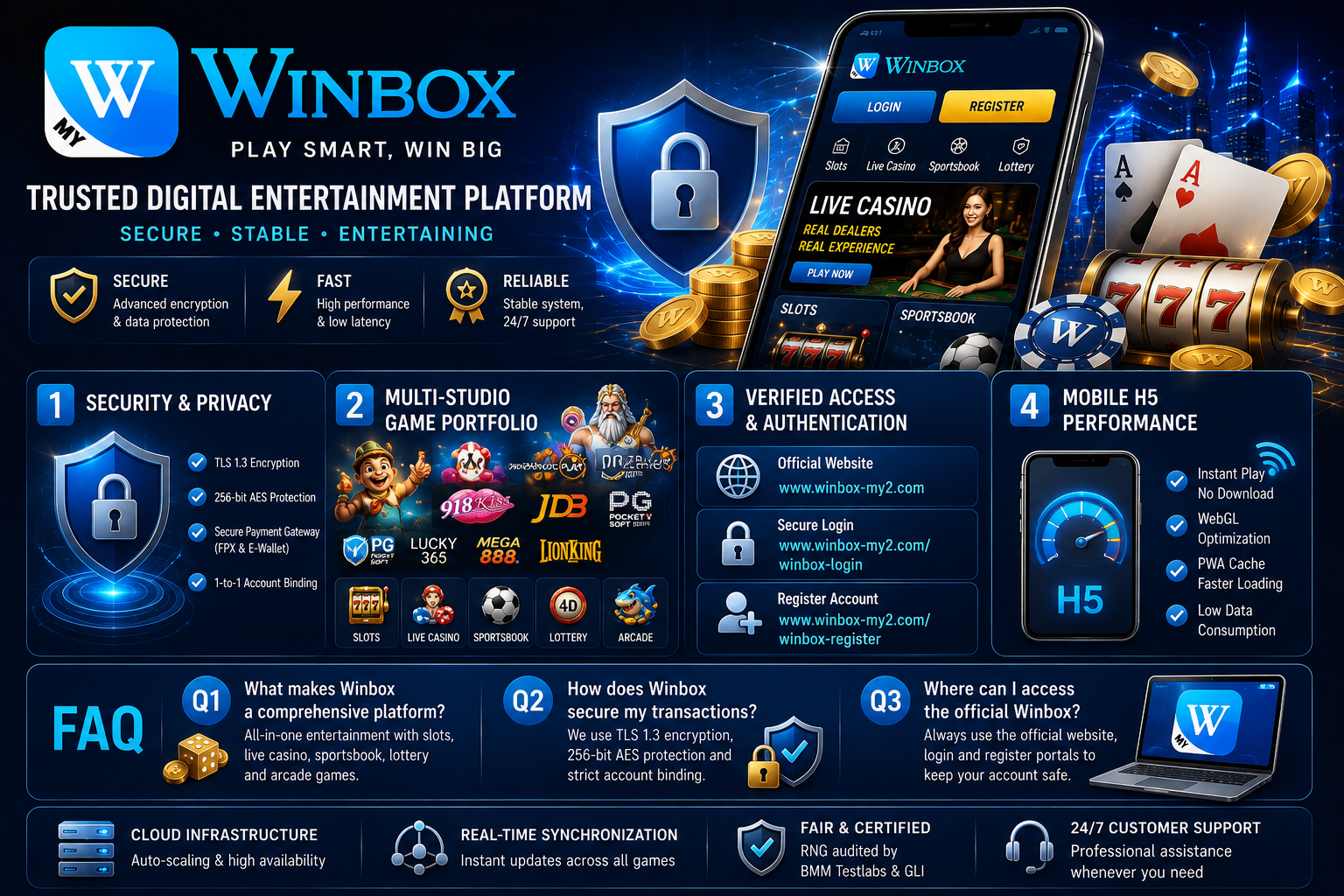
- Domain Consolidation: System transitions allow tech teams to deprecate legacy endpoints, rerouting users away from obsolete addresses to official, verified gateways—such as updated brand platforms like Winbox—thereby minimizing phishing vulnerabilities.
- Load Balancing: Anycast DNS technology distributes traffic dynamically across redundant server clusters to mitigate server overload during high-concurrency events.
Security Frameworks: Protecting User Data in High-Risk Environments
Digital gaming environments handle sensitive financial micro-transactions and personal identification metadata every second. Consequently, platform security has shifted from basic perimeter defense to comprehensive, zero-trust cybersecurity protocols. Modern architectures enforce rigid data handling principles across multiple operational vectors:
- Data Transport Encryption: Utilizing TLS 1.3 encryption alongside 256-bit AES cryptographic protocols to secure data payloads moving between client devices and central databases.
- Access Control & Gateway Hardening: Implementing multi-factor verification, automated IP anomaly profiling, and strict session controls on hardened entry points—such as verified portal interfaces like winbox login—to mitigate brute-force and credential stuffing threats.
- Active Threat Mitigation: Deploying multi-layered Distributed Denial of Service (DDoS) scrubbing networks combined with Web Application Firewalls (WAF) to buffer against volumetric application-layer attacks.
Essential Security Standards:
- End-to-End Encryption: Transport Layer Security (TLS 1.3) protects incoming and outgoing data payloads from interception by unauthorized third parties.
- Access Gateway Hardening: Authentication modules implement rate-limiting and IP risk profiling to mitigate automated brute-force attempts and credential stuffing attacks.
- Third-Party RNG Auditing: Legitimate gaming software relies on Random Number Generators (RNG) verified by accredited testing laboratories (such as BMM Testlabs or GLI) to ensure unmanipulated mathematical outcomes.
The Shift Toward Mobile-First Web Architecture
Native mobile applications often face compatibility friction across diverse mobile operating systems, alongside heavy local storage requirements. In response, digital entertainment platforms are increasingly adopting Progressive Web App (PWA) methodologies.
Advantages of PWA Implementation:
- Zero Installation Overhead: Users can access dynamic gaming environments directly through standard mobile web browsers without downloading third-party software packages.
- Adaptive Screen Rendering: HTML5 interfaces automatically optimize visual assets to match varying hardware screen sizes, from mobile phones to high-resolution displays.
- Cross-Device Session Persistence: User preferences, historical activity, and system configurations synchronize smoothly across devices without requiring re-authentication.
Industry Outlook: The Future of Digital Entertainment Tech
As edge computing, artificial intelligence for fraud detection, and low-latency video streaming continue to mature, the gap between traditional entertainment and digital platforms will narrow further. Platforms that prioritize infrastructure resiliency, domain safety, and verified operational security will continue to define the technological standards of the global gaming ecosystem.