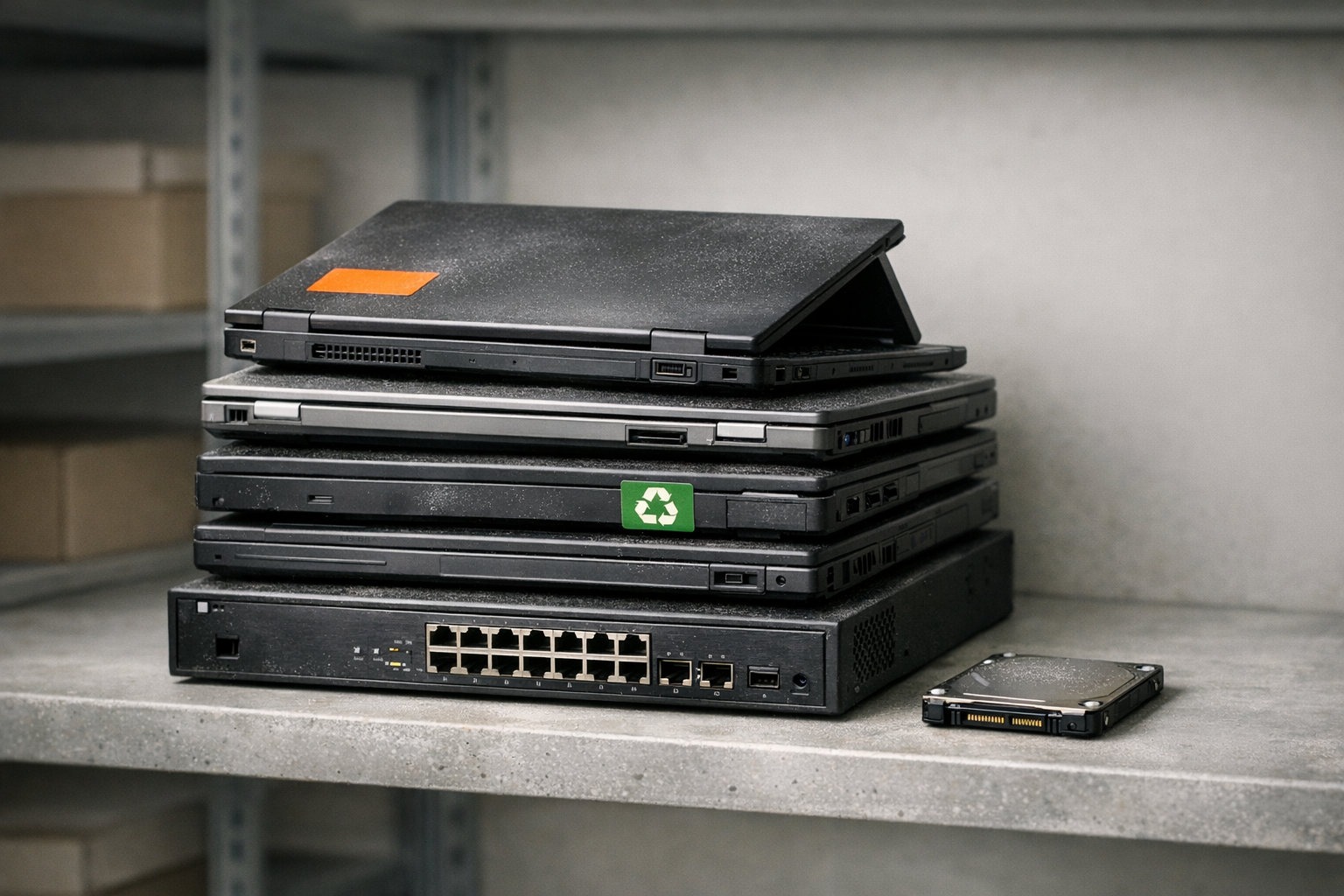
Across businesses, countless forgotten devices quietly fill storage closets, posing challenges far beyond simple clutter. These “tech graveyards” drain budgets, complicate security, and undermine environmental goals by hiding unused or neglected equipment. Addressing this buildup requires understanding why excess IT assets accumulate and implementing lifecycle strategies that prevent technology from silently piling up.
Many organizations face mounting piles of outdated laptops, servers, and network gear tucked away in storerooms or remote office cabinets. This unseen accumulation of hardware, sometimes referred to as “zombie IT assets,” results in equipment lingering on inventory lists while serving no business function. Over time, the graveyard of forgotten tech not only ties up capital but also introduces risks and derails ESG initiatives. Deliberate lifecycle management, including proper IT Asset Disposition, is vital to break the cycle and keep technology assets visible, secure, and productive.
Uncovering The Sources Of Forgotten Hardware
The graveyard of unused equipment emerges for several reasons. Rapid tech refresh cycles and constant upgrades lead to working devices being decommissioned ahead of their useful life. Often, the handover from one team to another is unclear or undocumented, so devices wind up in closets rather than being properly retired or recycled. These excess IT assets typically remain on official records, skewing inventory data and making it difficult for finance or IT leaders to plan accurately.
Lack of disciplined asset tracking and inconsistent processes compound the problem, as hardware may be physically out of sight but still visible on network inventories or support contracts. “Zombie IT assets,” devices forgotten but still present, pose operational challenges. They can consume support resources, create confusion about what can be redeployed, and provide opportunities for unauthorized use or unplanned losses.
Another contributing factor to technology graveyards is the reluctance of departments to surrender equipment, even when it’s no longer needed. Teams often hold onto devices “just in case” future needs arise, creating shadow inventories that bypass central IT oversight. Mergers, acquisitions, and office relocations further complicate matters, as hardware from legacy systems or closed locations frequently gets boxed up and stored rather than properly evaluated. Without clear ownership and accountability for asset disposition decisions, excess IT assets accumulate in forgotten corners, multiplying the challenge of maintaining accurate records and creating additional layers of hidden risk across the organization.
Security, Value, and ESG Risks In Technology Graveyards
The presence of undisposed hardware in storage is more than an organizational inconvenience. Forgotten equipment often holds residual company data, raising significant data security fears. If these assets are not tracked or managed, sensitive data may remain unprotected for years, creating vulnerabilities that are difficult to detect or remediate. Ensuring secure data erasure for hardware that was never formally retired is a challenge many organizations overlook until a security incident occurs.
Alongside security threats, tech graveyards represent lost financial value. The longer excess IT assets sit idle and unmonitored, the less likely they are to retain resale or reuse potential. Equipment that could be recycled or sold while still valuable often suffers from component loss, degraded condition, or expired support coverage, directly resulting in lost resale value. This neglect also conflicts with ESG intentions, as hoarding unused devices increases electronic waste and undermines sustainability claims by prolonging resource use without benefit.
Strategies To Reclaim And Prevent Technology Graveyards
Organizations can tackle these graveyards by implementing consistent and proactive hardware lifecycle management practices. Regular inventory audits, combined with accurate recordkeeping, help identify dormant or excess devices before they become liabilities. Automating asset detection through network tools enables rapid discovery of unmanaged hardware so timely retirement or secure disposition becomes possible.
Clear processes for end-of-use decisions and coordinated collaboration between IT, procurement, and finance are crucial. Objective triggers for replacement, such as vendor support expiration, help streamline when assets leave active duty. Committing to responsible IT Asset Disposition not only supports data security but also ensures that devices are recycled or sold to align with ESG goals. By maintaining discipline throughout the hardware lifecycle, organizations can reduce the risk of forgotten tech accumulating, reinforce sustainability efforts, and recover more value from their technology investments.