We dream up to 6 times per night, and vivid dreams are particularly common in children. These nocturnal adventures often fade the moment sunlight hits the floor, but they hold a massive reservoir of creative potential.
By channeling these subconscious sparks into physical projects, kids can process their inner worlds while building serious creative habits. Art becomes the bridge between a child’s wild imagination and their waking life.
The Surrealist Collage
Surrealism is the art of the impossible, making it the perfect vessel for dream imagery. Encourage your child to hunt through old magazines and printed materials to find unexpected visual elements that don’t belong together. They might pair a giant floating clock with a cat’s head or place a forest inside a glass jar. This process teaches kids that art doesn’t have to mirror reality to be meaningful.
You can set up a simple workspace with glue sticks and heavy cardstock for durability. Encourage them to layer textures until the page feels crowded with weird, wonderful shapes. It helps them articulate the strange logic of their own dreams without needing to draw perfectly.
Personalized Dream Catchers
Designing a dream catcher is a meditative task that requires patience and steady hands. You can use embroidery hoops as the base and weave yarn or twine through the center to form a web. Encourage your children to decorate their creation with feathers, beads, or ribbons that remind them of their favorite dreams.
There are many ways to approach the weaving process, and the tension of the string creates a unique pattern every time. It serves as a physical gatekeeper, turning the idea of a dream into a tangible object they can touch.
You could even integrate the dream catcher into the bedtime routine to bring calm and relaxation at a point in the day many children find tough. For instance, place these near the bed and make use of premium bedding made easy so that little ones can settle down swiftly, comfy and cozy. This creates the perfect environment for a restful and inspired night.
Glowing Constellation Mapping
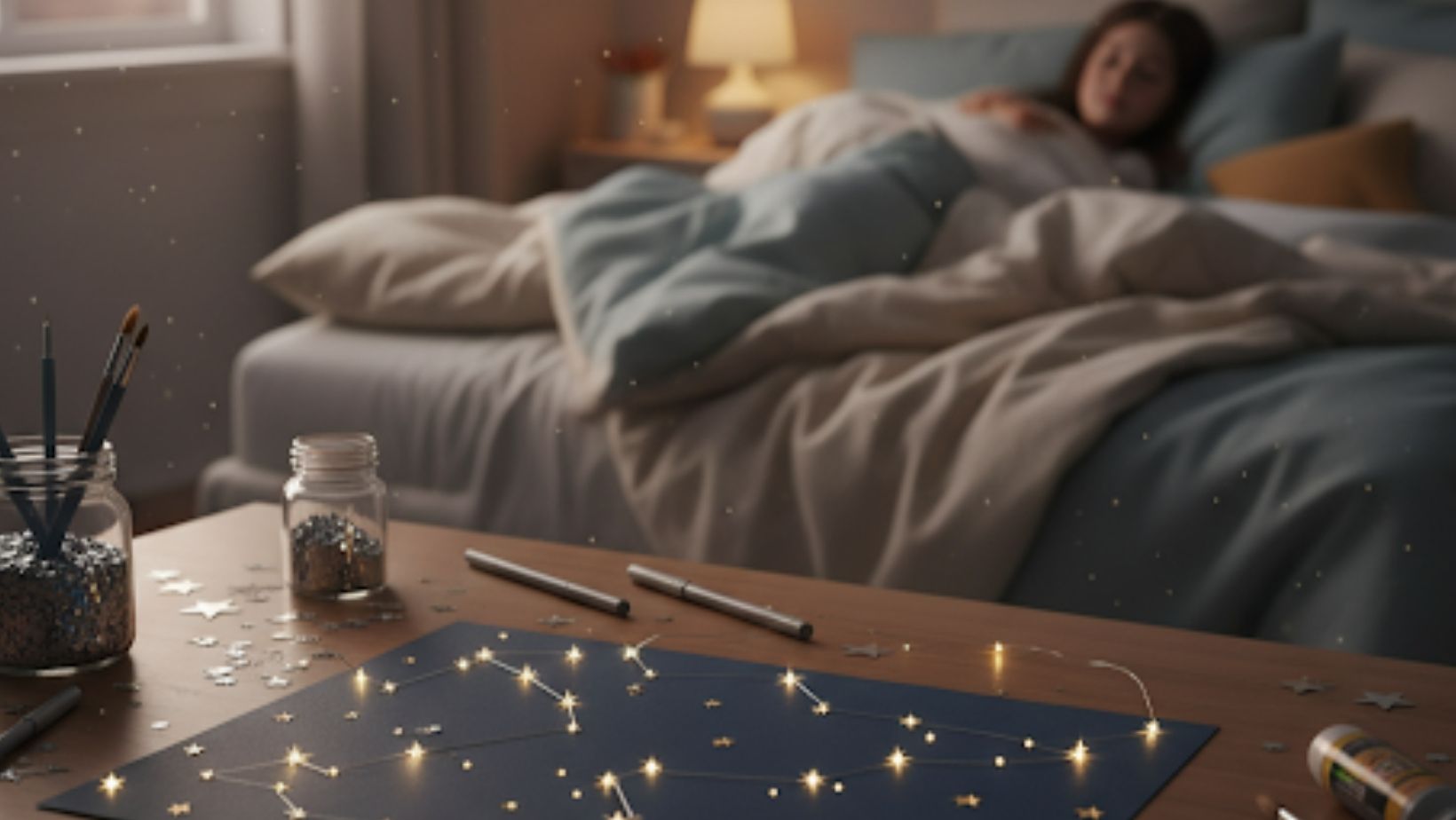
Dreams are often filled with vast, dark spaces that feel mysterious and endless. You can recreate this by using dark blue or black construction paper and glow-in-the-dark star stickers.
Let your children trace the star patterns they remember from their dreams or invent entirely new constellations that tell a story. It is a quiet activity, perfect for an afternoon when the energy in the house needs to shift toward focus.

Once the constellations are mapped, connect them with a metallic silver gel pen. You can discuss the myths behind real stars while they invent their own legends for their creations.
It bridges the gap between science and pure fantasy, giving them a visual anchor for their night sky. For more inspiration, introduce them to Starry Night and other famous paintings of constellations.
Shadow Story Theater
Shadow puppets bring the fleeting nature of dreams to life through light and silhouette. Cut out shapes from black cardstock and attach them to thin wooden skewers to build a cast of characters.
You can use a bright lamp directed at a plain wall to create a stage, allowing the puppets to move through a landscape of projected light. It offers a way to act out those weird dream scenarios that are difficult to put into words.
This works best in a dimly lit room, keeping the focus on the sharp edges of the shadows. As they move their figures, the stories often become more detailed and coherent. It turns a chaotic dream narrative into a structured performance that they control.
Dream World Mixed Media Art
For this project, you will use clear plexiglass or rigid plastic sheets to layer a dream portrait. Your child can start by drawing their own face directly onto the surface with permanent markers.
From there, they add layers of paint, scraps of colored paper, and glitter around the edges to represent the world of their dream. It creates a beautiful, multi-dimensional effect that feels like looking through a window into another dimension.
You can lean these pieces against a window so natural light passes through the transparent layers. It makes the dream world feel vibrant and alive, catching the light in ways that standard paper drawings simply cannot match.
Starry Night Splatter Experiments
Splatter art is the easiest way to capture the chaotic energy of a space-themed dream. Using diluted acrylic paint and an old toothbrush, kids can flick tiny, scattered dots across a dark canvas to create a massive star field. Once the background is dry, they use white chalk or paint pens to define the specific dream objects that appear in that space.
This technique is messy, but the results are always breathtaking and professional. It helps them understand how artists use chaos to create intentional, structured beauty. You can do this outdoors to keep the indoor space clean, making the setup much less stressful.
Nightly Journaling Sessions
The final project is less about craft materials and more about consistency. A dream journal acts as the primary source material for all the other art projects on this list. Use a plain notebook and let them decorate the cover with drawings of the things they see while they sleep. Keeping the materials organized means they can start a sketching session the moment they wake up.
Developing a calming wind down routine before bed makes the process feel special. When the sheets are soft and the room is quiet, the brain feels more comfortable exploring these creative channels. It turns the simple act of sleeping into a foundational part of their artistic growth.
Crafting A Creative Future
Building these art projects allows children to honor their subconscious experiences while developing technical skills. Whether they are painting shadows or weaving yarn, each activity serves as a way to externalize the internal.
Consistency in creative play is more valuable than individual masterpieces, as it builds the mental muscles required for complex thinking. Give them the space, provide the materials, and watch their dream worlds evolve into something they can hold on to. For more projects and artistic inspirations, check out the other posts on our site.