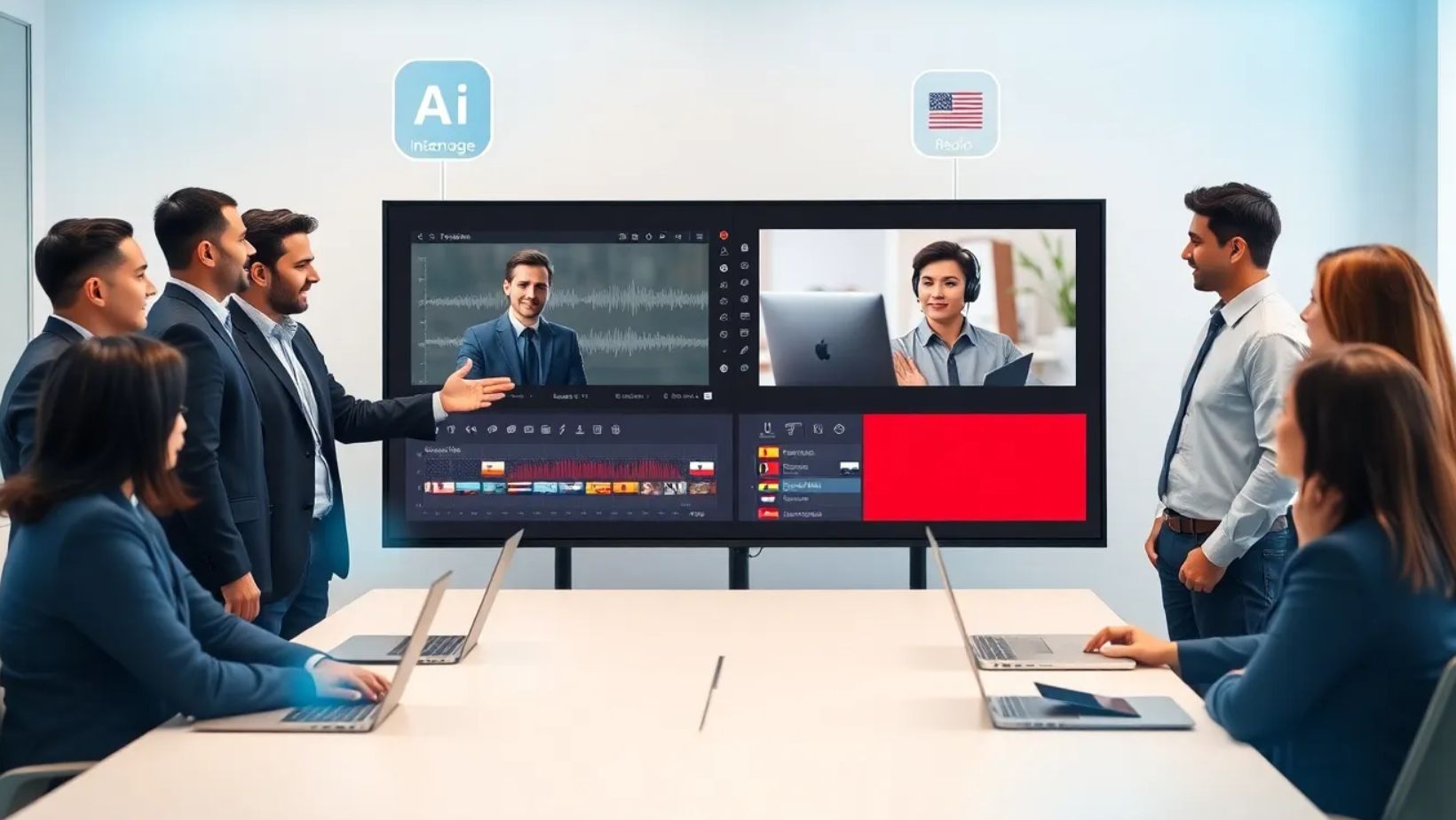
AI dubbing video technology has rapidly shifted how creators and businesses adapt videos for global audiences. Instead of relying on expensive, time-consuming studio dubbing, today’s AI-powered solutions let anyone translate, voice, and lip-sync video content quickly and at scale. Advanced platforms specializing in AI dubbing video have made professional-quality localization accessible to businesses of all sizes, not just major studios. As video becomes the main medium for entertainment, education, marketing, and e-commerce, understanding the new era of AI dubbing is essential. This guide breaks down how AI dubbing works, major platforms like Vozo, and what to expect from these tools in 2026.
Key Takeaways
- AI dubbing video platforms like Vozo allow creators to rapidly localize content in dozens of languages without costly studios or lengthy workflows.
- Benefits of AI dubbing video include faster turnaround, reduced costs, improved accessibility, and consistency for businesses, educators, and marketers.
- Top platforms in 2026 offer features such as neural voice cloning, emotion transfer, batch processing, and precise lip-sync for realistic dubbed videos.
- AI dubbing video makes high-quality multilingual content creation accessible to small businesses and individual creators, not just large studios.
- For content where emotional tone and authenticity are essential, AI dubbing video with advanced features is preferred over simple subtitles.
How AI Dubbing Is Transforming Video Localization
Traditionally, dubbing a video for a new language involved hiring voice actors, booking studio time, managing scripts, and coordinating long post-production workflows. This was expensive and often made sense only for big movie studios or major broadcasters.
AI dubbing video platforms have changed this landscape. By using advanced neural text-to-speech, voice cloning, and language models, they recreate speech in different languages within hours, not weeks. More importantly, AI can mimic human emotion, adjust pronunciation, and synchronize the new voice to match the original speaker’s mouth movements (a process known as lip-sync).
For global brands, this means marketing videos can reach new audiences rapidly, sometimes with one click. For educators, e-learning content is far easier to make accessible. AI dubbing has opened the door for content creators, social media influencers, and small businesses to create multilingual content without a Hollywood budget.
Vozo’s AI-powered dubbing technology is notable here. It supports hundreds of languages and accents, automates the workflow from upload to finished dubbed video, and delivers consistent quality at scale.
Highest 7 AI Dubbing Video Platforms in 2026
AI dubbing is booming, and the number of available tools keeps climbing. Here are the top 7 AI dubbing video platforms to consider in 2026.
1. VOZO AI
Business: Vozo AI
Spokesperson: CY Zhou
Position: Founder and CEO
Phone: N/A
Email: [email protected]
Location: 440 N Wolfe Rd, Sunnyvale, CA 94085, USA
Website: vozo.ai
Vozo AI stands out for its advanced multilingual capabilities, natural-sounding neural voices, and seamless workflow. It covers voice cloning, emotion transfer, accurate lip-sync, and one-click export for a polished dubbed video. With Vozo, users can upload content and receive localized versions in over 60 languages, complete with regional dialects and synthetic voices tailored to audience preferences. Its robust cloud infrastructure makes it a strong choice for agencies, educators, and brands needing reliable, fast turnaround on video localization.
2. AI Dubbing (aidubbing.io)
AI Dubbing focuses on quick, automated translation and dubbing for social media clips and marketing videos. Its strength lies in speed and ease of use, providing decent voice selection and sync features. While not as customizable as Vozo, it’s a solid choice for those needing rapid video adaptation and short-form content transformation.
3. CAMB.AI
CAMB.AI offers expressive voice synthesis and tone matching, targeting documentary and educational content. The platform supports team workflows, secure hosting, and transit encryption, important for organizations working with sensitive material. Its quality control features help maintain original intent and emphasis across languages.
4. Dubly
Dubly delivers a scalable solution for content creators who want to automate video dubbing. Its platform supports batch video processing, multiple file types, and real-time previews of dubbed material. Dubly’s focus is on ease of integration with other media tools and accessible pricing for independent creators.
5. Rask
Rask pairs text-to-speech with AI-powered translation, targeting business and marketing videos. Its synthetic voices can be fine-tuned for tone and pace, while an intuitive interface allows for rapid editing. Rask appeals to brands needing quick turnarounds without much technical know-how.
6. Dubverse
Dubverse specializes in AI dubbing for Indian and Asian languages, filling a major gap for those targeting quick adaptation into Hindi, Tamil, Telugu, and other regional tongues. It also provides automatic script generation, multiple voice options, and accurate timing for local marketplaces.
7. ElevenLabs (Dubbing)
Known for its sophisticated voice AI, ElevenLabs Dubbing aims at premium productions where authenticity and emotion matter most. It leverages advanced voice cloning that maintains natural intonation, making it ideal for films, high-value learning modules, and enterprise marketing.
Types of AI Dubbing Workflows Available
AI dubbing workflows can adapt to a number of project needs. The most common types are:
- Automatic (Full AI): Upload your video, select the target language and voice, and let the platform handle everything, including translation, voice synthesis, lip-sync, and export. Vozo’s platform is especially well-suited for this with its end-to-end pipeline.
- Semi-Automatic: The platform translates and dubs automatically, but users can tweak/edit the script, replace voices, or refine timing before final rendering. This is helpful for content where brand voice and terminology need tight control.
- Batch or Bulk Processing: For users with a high volume of videos (such as e-learning platforms or agencies), AI enables the upload and simultaneous dubbing of many files, streamlining multilingual library creation.
- Custom Workflow: Enterprises or high-end productions might upload their own scripts, clone specific voices, or apply brand guidelines to ensure each dubbed video matches exact requirements.
Choosing the right workflow depends on the volume, budget, requirements for customization, and the timeline for delivery.
Benefits and Considerations of AI Dubbing Video
AI dubbing helps break down communication barriers, boosts content accessibility, and can dramatically expand audience reach. Some core benefits include:
- Speed: What used to take weeks now takes hours or less. Platforms like Vozo can process a typical video in minutes, depending on length.
- Affordability: Automated pipelines lower costs by removing the need for studios, actors, and manual syncing.
- Consistency: AI creates uniform voices, pronunciation, and emotion across lengthy or recurring content, vital for serial videos or brand channels.
- Scalability: Localize one video or a thousand with only modest setup, fitting the fast pace required in social media and global marketing.
- Accessibility: Multilingual dubbing serves diverse audiences, enhances learning, and improves engagement.
Considerations:
- AI synthesized voices, while advanced, may still struggle with niche slang, humor, or unique cultural references.
- Emotional tone transfer and nuanced delivery (such as sarcasm or wordplay) can be hit or miss.
- Privacy or security: sensitive material may need extra review or local processing, which platforms like Vozo accommodate with enterprise options.
What Are the Benefits of AI Dubbing Over Traditional Dubbing?
AI dubbing offers a much quicker and less costly alternative to traditional studio dubbing. Here’s how they compare:
- Cost Savings: Automated AI workflows eliminate most studio and voice actor fees.
- Faster Turnaround: AI does not require scheduling people or booking facilities. Automated services work round-the-clock.
- Wider Language Choices: AI-driven platforms like Vozo can offer dozens of languages, regional dialects, and both male/female or child voices at the click of a button.
- Easier Iteration: Need to update a translation, fix a timing issue, or release an improved edit? AI makes editing, re-rendering, and exporting almost instant, without starting over.
- Accessible Entry Point: Small businesses, educators, and individual creators can dub content without technical expertise or big budgets.
Traditional dubbing might still offer an edge for feature films or when highly specific human emotion and tone are demanded, but for 90% of business, marketing, e-learning, and social content, AI dubbing is often the better fit.
Is AI Dubbing Worth It for My Videos?
AI dubbing is almost always worth considering if your content needs to reach global audiences or non-native speakers.
Content creators, marketers, e-commerce teams, and educators often find the ROI compelling for these reasons:
- Shortens time to market for multilingual campaigns
- Increases views and engagement rates on social channels
- Helps training videos, e-learning courses, and product demos reach wider classrooms or customer bases
- Spend less on translation and voice work over time
If your focus is fast, affordable, and repeatable video content, AI dubbing platforms like Vozo are the new standard. But, if your videos rely heavily on unique voices, celebrity actors, or content full of wordplay, a hybrid approach may be worth exploring.
What Should I Look for in an AI Dubbing Tool?
The most useful AI dubbing platforms share a few key features. Look for:
- Language and voice library: Does it support all your target languages and offer enough synthetic voices to match your needs?
- Lip-sync accuracy: Proper mouth movement alignment is critical for realism. Check platform samples, Vozo offers advanced neural lip-sync across common genres.
- Customization: Ability to fine-tune script translation, pacing, and emotion transfer.
- Batch support: If you have many videos, bulk processing saves significant time.
- Editing tools: Built-in waveform, sync, and text editors give you control without needing extra software.
- Export options: Common video formats and social-ready resolutions. One-click download helps keep publishing fast.
Also, check for enterprise security features, especially for sensitive projects or internal company training.
How to Choose AI Dubbing Video Software
Start by mapping out your exact video dubbing needs:
- Volume: How many videos will you localize per month?
- Languages: Which target audiences do you prioritize?
- Customization vs. Speed: Do you need ultra-fast outputs (for social) or highly edited (for education/marketing)?
- Budget: Does the platform offer transparent pricing?
- Ease of Use: Consider if your team can run the platform with minimal training.
- Integrations: Some tools, like Vozo, connect directly with major video editing software or CMS.
Test drive a few top contenders with demo projects. Compare lip-sync, export times, and voice quality before committing. For large-scale localization, platforms that allow workflow automation and team collaboration will pay dividends.
How Long Does AI Dubbing Take from Upload to Export?
AI dubbing is fast compared to manual methods. Most platforms process a 2-10 minute video in under 30 minutes, start to finish. Short videos for social media might finish in as little as 5 minutes.
Vozo’s infrastructure is designed for speed: users regularly export multi-language dubs of training or marketing videos the same day they are uploaded. For larger files or more customized workflows, add some time for script review or final editing, a process still much quicker than studio dubbing.
Batch processing may add to total queue time, but platforms prioritize efficiency for large project uploads.
When Should I Consider AI Dubbing Instead of Subtitles Only?
Subtitles offer a basic route to make videos accessible, but they aren’t always the best fit. Consider AI dubbing over subtitles if:
- Your audience prefers listening over reading (e.g., mobile-heavy viewers, young learners)
- The original video includes emotion or tone where hearing is essential
- You want to boost engagement, retention, or viewer satisfaction
- Your brand values consistent presentation across markets
AI dubbing, especially through platforms like Vozo, allows viewers to fully experience content in their own language without missing context or emotional impact.
Timeline and Process Expectations for an AI-Dubbed Video
Here’s what to expect:
- Upload: Drag and drop your video onto the AI dubbing platform (takes seconds).
- Language & Voice Selection: Choose the target language and select a synthetic voice, or let the system recommend options for you.
- Automated Processing: AI translates, synthesizes the voice, applies lip-sync and emotion conversion (under an hour for standard projects).
- Optional Review: Some tools let you preview, edit, or fine-tune the dub before export.
- Export & Download: Get the dubbed video file in your preferred format, ready for distribution.
Platforms like Vozo have streamlined all of this, so teams with no previous dubbing experience can manage the process with minimal training. Expect to go from upload to distributed video within the same day for most standard projects.
Latest Trends and Technology in AI Dubbing
AI dubbing tech is moving quickly in 2026. Notable trends:
- Emotion-aware voice synthesis: Modern neural voices express real human emotions, improving the connection with the audience.
- Ultra-fast lip-sync: Improved algorithms let dubbed voices perfectly match the speaker’s mouth, crucial for realism.
- Voice cloning: Advanced platforms clone the user’s voice for personalized localization, or replicate specific celebrity/influencer voices for brand campaigns.
- Adaptive accent & dialect support: More accurate regionalizations, from Spanish as spoken in Mexico vs. Spain, to subtle tone shifts for Asian languages.
- Integrated workflow automation: Seamless connections with video editing, CMS, and translation management so nothing gets lost or delayed.
Vozo continues to lead the market with all these features, offering custom voice options, hundreds of languages, and a commitment to natural-sounding video localizations.
Frequently Asked Questions About AI Dubbing Video
What is AI dubbing video and how does it work?
AI dubbing video uses artificial intelligence to translate, synthesize human-like voices, and lip-sync video content in different languages. Platforms use neural text-to-speech, voice cloning, and language models to recreate speech, synchronize mouth movements, and adapt emotion, greatly speeding up video localization.
What are the benefits of using AI dubbing video over traditional dubbing?
AI dubbing video offers faster turnaround, lower costs, wider language choices, and easier edits compared to traditional studio dubbing. It enables creators to localize content at scale while maintaining consistent quality, making it ideal for global brands, educators, and small businesses.
How do I choose the best AI dubbing video platform?
Look for platforms with broad language support, accurate lip-sync, customization options, batch processing, easy editing tools, export flexibility, and strong security. Leading tools like Vozo offer these features, but test a few with sample projects to compare voice quality and workflow.
When should I use AI dubbing instead of subtitles in videos?
Choose AI dubbing video when your audience prefers listening over reading, or when capturing emotion, tone, or engagement is important. Dubbing is ideal for marketing, education, or content where hearing information creates a fuller viewer experience.
What are the latest trends in AI dubbing video technology?
Recent advances include emotion-aware voice synthesis, ultra-fast lip-sync algorithms, voice cloning for personalized or brand campaigns, adaptive accent support, and seamless workflow integration with editing software and CMS platforms.
Can AI dubbing video accurately replicate unique voices or humor?
While AI dubbing excels at translation and general emotion transfer, it still faces challenges with unique slang, cultural references, or nuanced humor. For content relying heavily on these, combining AI with professional oversight may yield the best result.