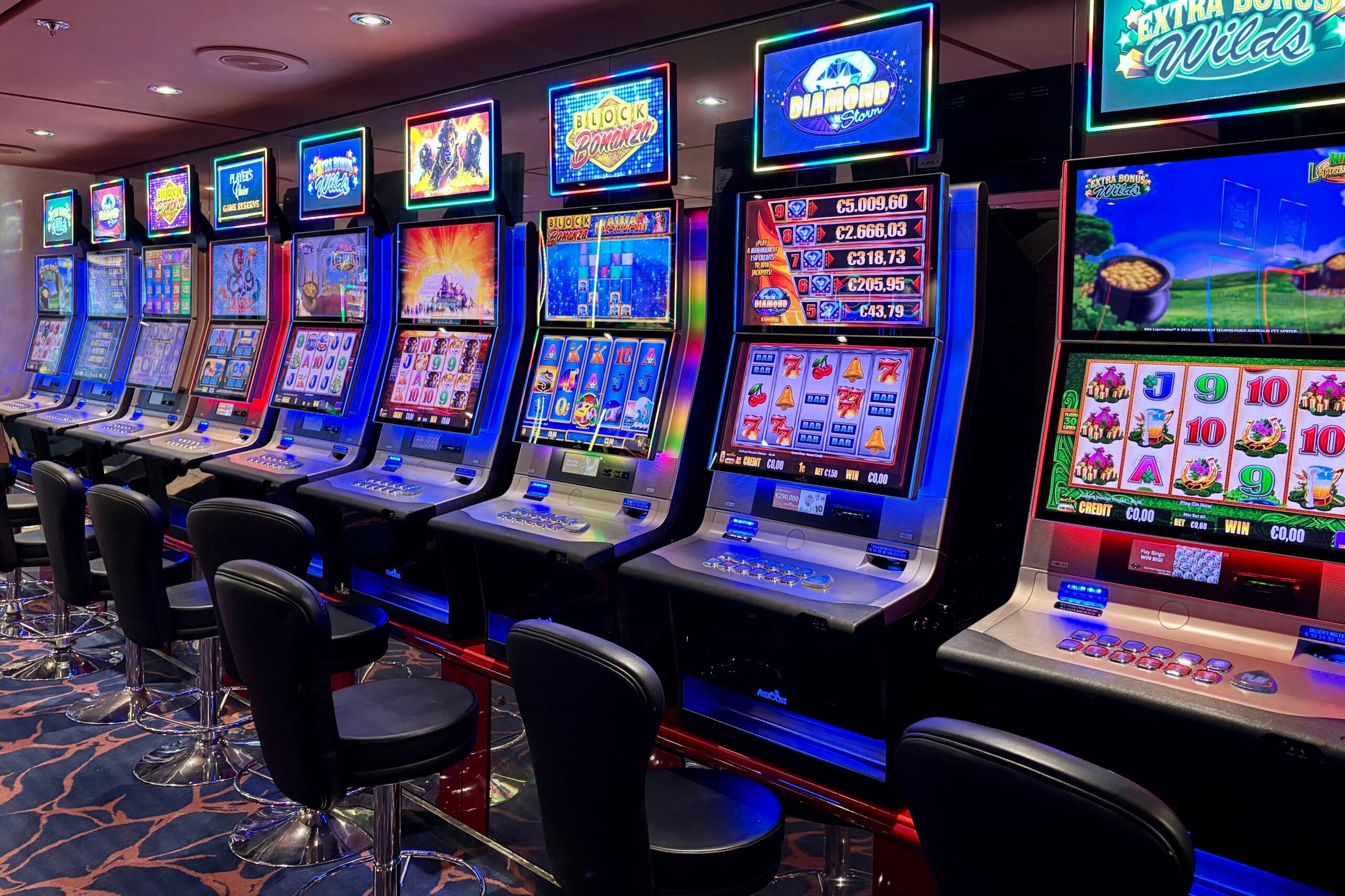
People universally can agree that playing online slots is one of the most enjoyable things to do, and no, it isn’t because people enjoy losing money. It’s more because of the people who design them, they understood something vital about the human brain and how it processes uncertainty. This process is something most game developers are still catching up with until today. The mechanism is not secret. It was identified in a laboratory in the 1950s by a psychologist named B.F. Skinner. It has been in the design of every slot machine built since. And it works on basically every human being who has ever played one, regardless of whether they know it is happening.
Skinner’s research involved pigeons and levers, which sounds like it has nothing to do with spinning reels, but the principle transferred directly. When he rewarded pigeons for pressing a lever on a fixed schedule, they pressed it a predictable number of times and then stopped. When he rewarded them randomly, unpredictably, with no pattern, they pressed it far more often and kept pressing it long after the rewards stopped coming. The technical term is variable ratio reinforcement. The practical effect is compulsion. It is the most powerful conditioning schedule ever identified in behavioral science and it sits underneath every spin in every slot game ever built.
The reason it works on humans is the same reason it works on pigeons: dopamine. Specifically, the way dopamine is released not when a reward arrives but in anticipation of a possible reward. This is the bit that most people misunderstand about how slots feel. The pleasure is not in winning. It is in the possibility of winning. The moment before the reels stop, when anything could still happen, is neurologically more stimulating than the outcome itself in most cases. Which is why near misses, the cherry-cherry-lemon, the two jackpot symbols and one just above the payline, feel so different to a clear loss even though both outcomes cost you exactly the same amount of money. Brain imaging research has shown that near miss events activate the same neural pathways as actual wins. Your brain registers them as almost, and almost feels like progress.
For anyone who has played online slots and found them harder to close than expected, this is the mechanism at work. BoyleSports and most licensed platforms are required to provide responsible gambling tools precisely because the underlying design is so effective at keeping attention engaged. Knowing why the loop works does not necessarily break it, but it does change how you engage with it.
The Design Layer Nobody Mentions
Modern online slot design has been borrowed from video game development in ways that make the variable reward loop significantly more complex than a simple spin-and-stop. Free spin rounds introduce what researchers call a variable-ratio-within-variable-ratio structure: you are playing a variable schedule to trigger a bonus round, inside which you play another variable schedule for the actual rewards. The nesting amplifies the effect. Getting into a free spin round feels like winning even before the spins happen, because the brain has been conditioned to treat that trigger as a reward in itself.
Sound and visual design do significant work alongside mathematics. The audio on a win, the cascade of coins, the flashing lights, are not decoration. They are conditional reinforcers, stimuli that the brain learns to associate with reward through repeated pairing. In laboratory conditions this is straightforward to demonstrate. In a slot game with an experienced player, the sound of a small win is enough to trigger a dopamine response before the player has consciously registered the payout amount. Losses disguised as wins, where a player gets back less than their bet but receives the full celebration audio and visual treatment, exploit the same conditioning in a direction that most players find deeply counterintuitive once it is explained to them.
The near miss is the most studied element of slot psychology and the most contested. B.F. Skinner first wrote about it in 1953, identifying it as a mechanism casinos were using to exploit conditional reinforcement. University of Alberta research published in 2019 reviewed 66 years of near-miss literature and confirmed the effect is real and robust across both human and animal subjects. The machine is doing something deliberate when those two jackpot symbols appear and the third lands one row below the payline. That placement is not random. In mechanical slots it sometimes was. In digital slots it is a programmed outcome that the RNG would not have produced but the display is designed to show, because the designers knew from decades of research that it would keep players spinning.
None of this makes online slots bad. The same variable reward principles power every loot box, every gacha mechanic, every daily reward system in every mobile game ever made. The pull-to-refresh on social media is mechanically identical to pulling a lever. Former Facebook VP of Growth Chamath Palihapitiya said it publicly: the short-term dopamine feedback loops his team built were deliberately modelled on the same research. Former Google design ethicist Tristan Harris calls smartphones slot machines in your pocket. The slot came first. Everything else is the derivative.
What online slots have that most of those other applications do not is a clear financial cost visible on every spin, which at least makes the transaction legible. You know what you are spending. The design still works on you. But you know.